
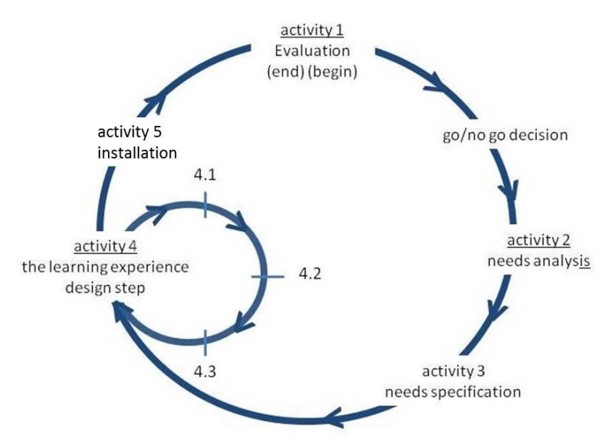
Figure 1 The place of the learning experience design step in the design process at the micro (course and lesson) level
Since it follows 'needs specification' (activity 3), and precedes the learning experience itself (activity 5), it is appropriate to label activity 4 the learning experience design step. This is the step at which all your creativity, intuition and logical thinking are challenged. It is close to the teaching-learning situation itself.It is useful to distinguish three sub-activities (4.1, 4.2 and 4.3) at this step. These sub-activities (Fig. 1) have already been referred to in the Foreword to this book. They are:4.1 Thinking up a design4.2 Working out a thought-up design4.3 Testing and revising a thought-up, worked out designand are examined in detail in Chapters 2, 3 and 4.An important premise underlies the content of the activities named in Fig. 1. This is that a design per se, the 'plan, structure and strategy of instruction', is created after the needs have been analysed (activity 2) and specified (activity 3). The needs specification (activity 3) itself is in no way a specification of the actual plan, structure and strategy of instruction. What the activities named in Fig. 1 involve will be illustrated shortly with the help of a case study.In this book the learning experience design step is seen to demand specialist know-how and didactical cunning. You have to be a bit of a scientist, a bit of a magician and a bit of a fox to think up, work out, and test and revise a design in an optimal way.